A Long-Term Answer to the Biosolids Question.
Landfill costs rise, regulations tighten, and the public is paying attention. WINR Centers give municipalities a permitted, local, long-term outlet for biosolids and organics, one that turns a budget line into a community sustainability story.
Discuss Your Long-Term Strategy →Or call: (712) 647-2810Every Year, the Biosolids Math Gets Harder
Landfill costs keep rising
Tipping fees climb annually while your budget doesn't. The current path gets more expensive every single year.
Land application is getting harder
Fewer willing fields, tighter windows, more scrutiny. The outlets you've relied on for decades are narrowing.
Regulations only move one way
What's compliant today may not be in five years. Long-term planning needs an outlet built for where the rules are going.
The public is watching
Water quality and waste management are front-page topics in Iowa. Residents want to know their city has a real plan.
Budgets are fixed, problems aren't
You're asked to solve a growing problem with flat dollars. Predictable costs matter as much as low ones.
None of this is your fault. Until now, there hasn’t been a better system. We built one.
A Permitted Outlet Your 20-Year Plan Can Count On
WINR Centers are built on 20 years of nutrient management infrastructure, designed to be the outlet that’s still here decades from now.
Long-term biosolids outlet
A permanent, permitted destination, not a year-to-year arrangement that disappears when a farmer retires or a rule changes.
Reduced landfill dependency
Divert organics from landfill, extend landfill life, and step off the tipping-fee escalator.
Potential cost savings
Often cost-competitive with current disposal, with pricing your budget office can forecast.
Local nutrient recycling
Your community's organics become fertilizer for the farms surrounding your community. That's a story for the council meeting.
Regulatory confidence
Fully permitted, documented, audit-ready. When the rules tighten, you're already where they're headed.
A public relations win
"Our city recycles its nutrients locally" beats "our city trucks its waste to a landfill" in the paper, and at the ballot box.
From Your Dock to a Farmer’s Field
We Assess Your Stream
Volume, composition, frequency, current disposal costs. No two waste streams are identical, so we design around yours.
We Handle Logistics
Pickup on a schedule that fits your operation. Transported to the nearest WINR Center. Documented end to end.
We Recover the Nutrients
Aerated Static Pile composting: controlled oxygen, temperature, and moisture. Consistent, high-quality output with lower emissions than traditional methods.
Farmers Put It to Work
Finished natural fertilizer goes to farms in our network. The nutrient cycle completes. Your waste built someone’s soil, and we can document it.
“A waste stream is just a nutrient out of place. Mother Nature made all of it. We just need to put it back where it belongs.”
Abe Sandquist, Founder, Natural Fertilizer Services
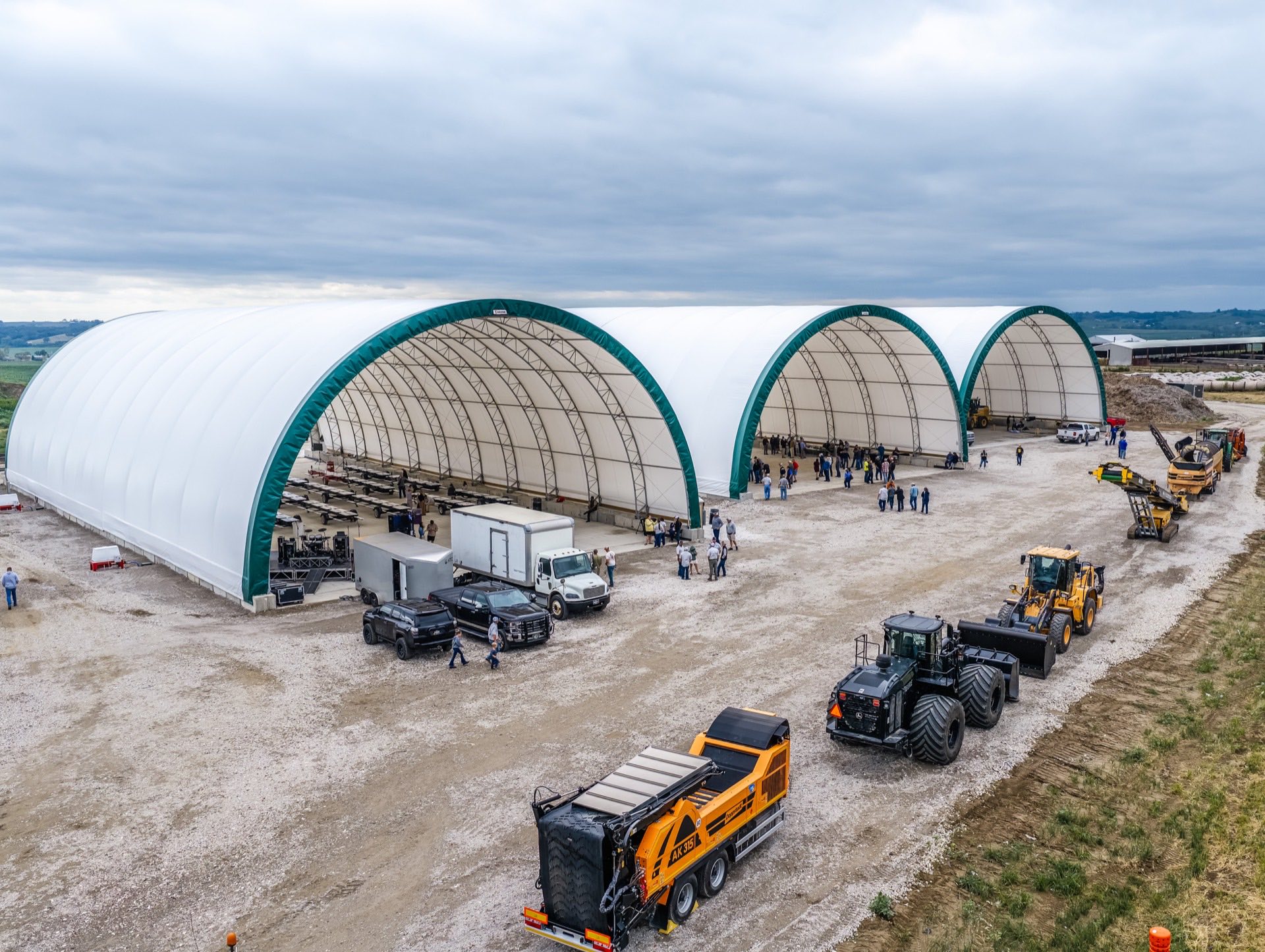
This isn’t an experiment.
Abe Sandquist spent 20 years turning livestock manure from a liability nobody wanted into one of the most sought-after biological fertilizers in the Midwest. WINR Centers apply that same proven playbook to your waste stream, backed by a USDA Fighting for Producers and Entrepreneurs (FPEP) grant, two facilities underway in Western Iowa, and a third site already purchased.
- USDA FPEP grant recipient
- 20+ years in nutrient management and logistics
- Iowa Entrepreneur of the Year 2025
- Former USDA-NRCS
- Fully permitted, documented, and audit-ready
Questions We Hear
Can you accept municipal biosolids?
How does this fit a long-term municipal plan?
What does it cost?
Where are you located?
How is this different from landfill disposal?
Give Your Community a Long-Term Win
Book a free introductory call. We'll assess your stream, walk you through the WINR model, and tell you straight whether it's a fit. No obligation, no pitch.
Schedule Your Call →Or call directly: (712) 647-2810, Monday–Friday